













50,000-year-old DNA reveals the first-ever look at a Neanderthal family
A new genetic analysis of 50,000-year-old Neanderthal remains found in a Siberian cave reveals that these humans traveled in small, family-oriented groups.

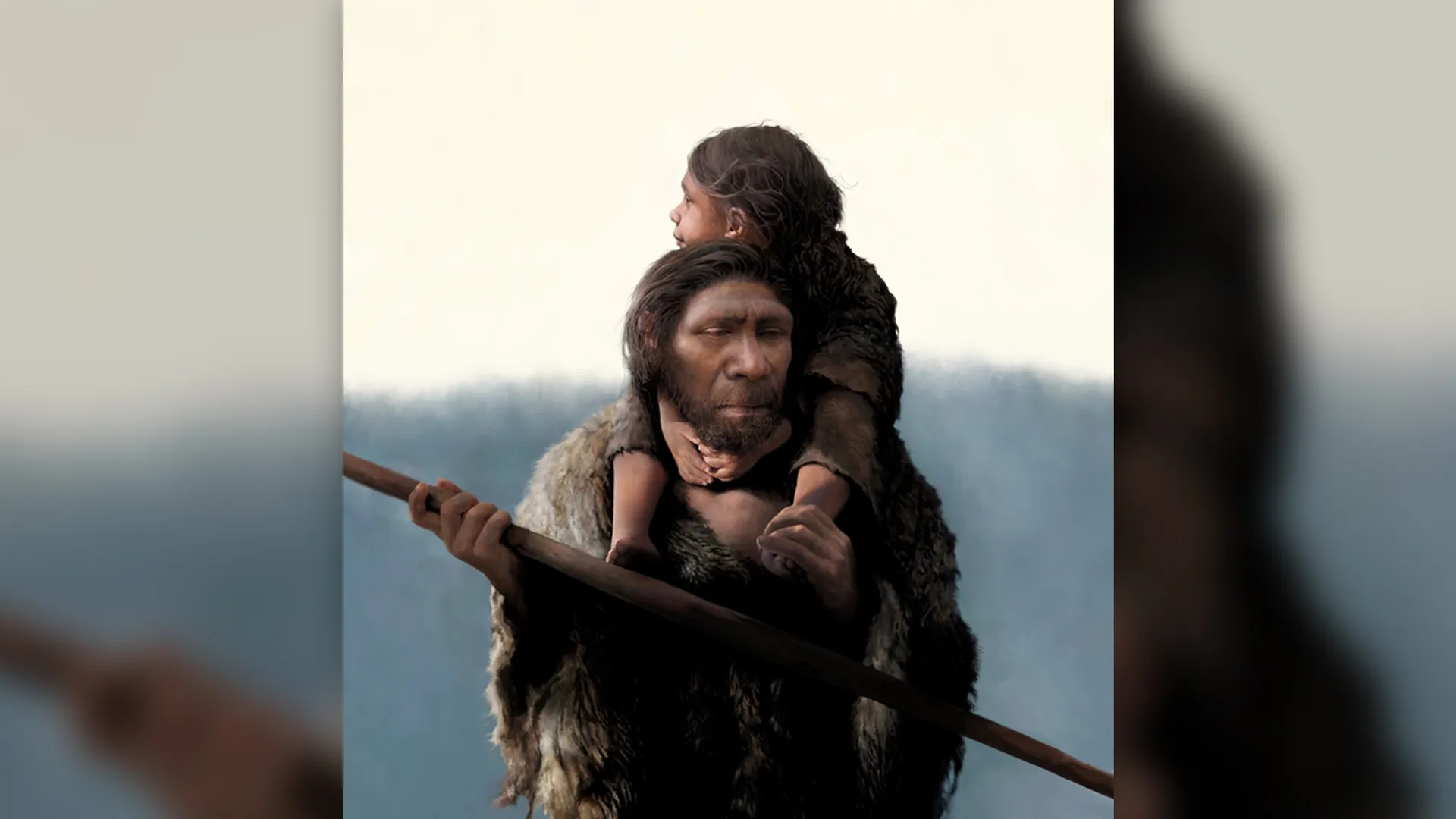
Nestled in a cave in the snowy Altai Mountains of Siberia, fragmented bones and teeth have revealed the first-ever glimpse of a Neanderthal family. More than 50,000 years ago, a group of adults and kids died while sheltering at their hunting camp, and the finding provides archaeologists and geneticists with the most complete set of Neanderthal genomes to date.
About 60 miles (100 kilometers) west of Denisova Cave, which produced evidence of an extinct species of hominin called the Denisovans just over a decade ago, lies Chagyrskaya Cave, where in 2019 excavators found some 90,000 stone artifacts, bone tools, animal and plant remains, and 74 Neanderthal fossils. The organic remains of Chagyrskaya Cave, which was presumed to be a short-term bison hunting camp, were radiocarbon-dated to between 51,000 and 59,000 years old. Pollen and animal remains show that the climate was quite cold in the short time Neanderthals occupied Chagyrskaya.
A new analysis published Oct. 19 in the journal Nature delves further into the genetic makeup of the Neanderthals at Chagyrskaya and neighboring Okladnikov Cave. The study yielded an astounding 13 genomes, nearly doubling the number of complete Neanderthal genome sequences in existence. While previous work estimated the size of Neanderthal communities based on footprints and site-use patterns, the new genomic analysis directly tested the hypothesis that Neanderthals lived in biologically related groups of 20 or fewer individuals.
Related: Neanderthals and humans were hooking up way more than anyone thought
Genetic data from 11 Neanderthals found at Chagyrskaya Cave gave the researchers the first incontrovertible evidence of Neanderthal familial relationships, according to the paper. The DNA from two individuals — an adult male and an adolescent female — suggested a "first-degree relationship," meaning it was possible for them to be mother and son, brother and sister, or father and daughter.
But their nonmatching mitochondrial DNA (mtDNA), which is generally passed on from mother to child, ruled out the first two pairings, leaving researchers face-to-face with a father and his teenage daughter. The father also shared mtDNA with two other males, who were likely close maternal relatives; "for example, they could have shared a grandmother," the authors suggested.
There is no evidence that these itinerant Neanderthals mingled with the nearby Denisovans, even though they were likely in the same place at the same time. The researchers wrote that, by their estimate, the Denisovans shared a common ancestor perhaps 30,000 years before the Chagyrskaya Neandertals lived and that the Chagyrskaya and Okladnikov individuals "all appear equally related to European Neanderthals and were part of the same Neanderthal population."
Get the world’s most fascinating discoveries delivered straight to your inbox.
RELATED STORIES
High similarity in the genome segments of these Neanderthals also led the researchers to "conclude that the local community size of the Chagyrskaya Neanderthals was small." Fitting models to the mtDNA and Y-DNA, the latter of which is passed from fathers to their sons, the best scenario "assumed a community size of 20 individuals," with female migration being "a major factor in the social organization of the Chagyrskaya Neanderthal community," the study authors wrote. In essence, some females remained with the group they were born into, while many others left their communities to join new ones. But the researchers aren't sure if this group size could be applied outside the Altai region, as the Chagyrskaya group may have been a unique, isolated example.
Isolation might have been these Neanderthals' undoing. Speculating on this group's cause of death, paleogeneticist and lead author Laurits Skov told The New York Times that the group may have died of starvation following a poor bison hunt, while geochronologist and co-author Richard Roberts told The Washington Post that "maybe it was just a horrendous storm. They are in Siberia, after all."

Kristina Killgrove is a staff writer at Live Science with a focus on archaeology and paleoanthropology news. Her articles have also appeared in venues such as Forbes, Smithsonian, and Mental Floss. Kristina holds a Ph.D. in biological anthropology and an M.A. in classical archaeology from the University of North Carolina, as well as a B.A. in Latin from the University of Virginia, and she was formerly a university professor and researcher. She has received awards from the Society for American Archaeology and the American Anthropological Association for her science writing.